

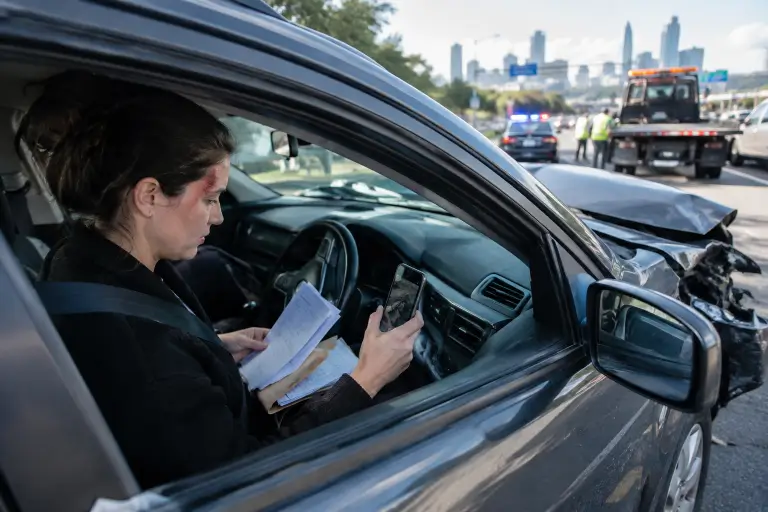
Key Takeaways
- Get to safety and obtain emergency medical care before attempting to collect information.
- Save photos, witness details, vehicle information, and medical paperwork as soon as practical.
- Truck-related evidence can include electronic logs, onboard data, video, dispatch communications, and maintenance records.
- Road conditions, camera footage, vehicle damage, and witness memories can change or disappear quickly.
- Avoid guessing about fault, minimizing injuries, or posting detailed crash opinions online.
An 18-wheeler crash on Atlanta roads can turn an ordinary commute on I-285, I-20, or the Downtown Connector into a confusing and painful emergency. The priority is always safety and medical care. Once immediate dangers have been addressed, organized documentation can help preserve a reliable account of what happened. Large-truck collisions can involve the driver, motor carrier, trailer owner, cargo shipper, maintenance provider, and several insurance companies. People who need guidance about preserving information or evaluating their options may choose to speak with a truck accident law firm, but there is no need to make rushed decisions at the crash scene.
Why the First 72 Hours Matter
A typical passenger-vehicle collision may involve two drivers and a police report. A commercial truck crash may also involve a tractor, trailer, cargo, separate business entities, and electronic systems. In Atlanta’s dense freight corridors, debris can be cleared, vehicles can be towed, and traffic can return to normal quickly. Nearby business or residential cameras may also record over older footage after a limited period. Early action does not mean assigning blame or immediately filing a claim. It means protecting facts while they are still available. Keep damaged personal property, avoid unnecessary repairs to a vehicle until it has been documented, and create a timeline while details remain fresh.
What to Do at the Scene
- Move to a safer location if you can do so without creating another hazard.
- Call 911, request medical assistance, and follow instructions from police, firefighters, and paramedics.
- Give officers a clear account of what you personally saw, heard, or experienced.
- Do not argue with the truck driver, witnesses, or other motorists.
- Do not move vehicles unless directed by responders or necessary to prevent immediate harm.
Details to Record if It Is Safe
- The time, exact location, travel direction, and lanes involved.
- Weather, lighting, road surface, congestion, and visibility conditions.
- The names of responding agencies and the report or incident number.
- Witness names, phone numbers, and brief notes about what each person observed.
Medical Care and Injury Documentation
Some crash-related symptoms may not be obvious in the first minutes or hours. Accept appropriate evaluation, follow discharge instructions, and report all symptoms, including headaches, dizziness, numbness, pain, sleep changes, or emotional distress, to medical professionals. Accurate medical records begin with complete information. Keep discharge papers, prescriptions, bills, appointment notices, and receipts in one folder. A short daily log can also be useful. Note symptoms, mobility limits, missed work, missed family activities, and changes in routine. Write only what is true and specific. A contemporaneous record is generally more dependable than reconstructing several weeks of events from memory.
Photos, Video, and Truck Information
Only take photos or video when you are physically able, and the location is safe. Wide shots can show the traffic pattern and roadway layout, while close images can document damage and identifying details. Preserve original files rather than editing, filtering, or replacing them.
- Vehicle positions, impact damage, tire marks, debris, cargo spills, and damaged guardrails.
- Traffic signals, lane markings, construction zones, road signs, and nearby businesses.
- Truck and trailer license plates, company names, unit numbers, and visible DOT numbers.
- The driver’s name, employer, and any cargo or logistics company listed on the equipment.
- Dash-camera footage, location history, text messages, and messages sent about the collision.
Electronic and Company Records
A commercial truck may generate records from more than one system. Depending on the vehicle and carrier, potentially relevant material can include dispatch communications, GPS or telematics data, braking and speed data, inspection reports, maintenance files, driver training records, cargo documents, and camera footage. Many commercial drivers use electronic logging devices to track driving time and time spent off duty. Those records may help establish a timeline, but equipment and record retention practices differ among carriers. The truck itself, trailer, and damaged vehicle may also be important physical evidence, so they should not be discarded or altered casually.
Witnesses and Public Records
Witness recollections can become less precise with time. Save the contact details promptly and write a short, neutral note about where each person was and what they observed. When the police report becomes available, obtain a copy and compare it with your own records. A report can be valuable, but it may not resolve every disputed fact. Ask whether nearby stores, apartment buildings, gas stations, or traffic systems may have video of the approach to or aftermath of the collision. At a broader level, federal fatal crash data can help researchers identify patterns in qualifying deadly traffic collisions, although it is not a substitute for investigating an individual Atlanta crash.
Insurance Contact and Common Mistakes
An insurer may contact you soon after a crash. Confirm the caller’s identity, company, claim number, and callback information. Provide basic facts when necessary, but do not guess about speed, distance, fault, injury severity, or facts you have not verified. Keep copies of emails, letters, voicemails, and claim correspondence.
Mistakes to Avoid
- Delaying needed medical care or skipping recommended follow-up visits.
- Throwing away damaged clothing, helmets, phones, or other property.
- Repairing, selling, or disposing of a vehicle before it is fully documented.
- Posting blame, opinions, or detailed crash discussions on social media.
- Signing a broad release without carefully understanding its effect.
A Simple 72-Hour Checklist
First 24 Hours
- Seek emergency care and save the police incident number.
- Preserve photos, videos, vehicle details, and witness contacts.
- Write a basic timeline while the sequence of events is fresh.
Hours 24 Through 48
- Arrange follow-up medical visits and begin a symptom and expense log.
- Organize documents and communications in one secure location.
- Identify possible camera sources near the crash location.
Hours 48 Through 72
- Review your timeline for missing information or records.
- Preserve damaged property and gather missed-work documentation.
- Consider obtaining qualified advice about evidence preservation and applicable deadlines.
Conclusion
The first 72 hours after an 18-wheeler crash in Atlanta can be overwhelming, especially when injuries, vehicle damage, and insurance questions arise at once. However, following a practical plan can help bring order to a difficult situation and make the next steps easier to manage. Prioritize safety and seek prompt medical attention, even if certain symptoms do not appear immediately. Once it is safe, document the scene, photograph vehicle damage, collect witness contact information, and record the responding officer’s details.
Preserve important evidence, including dashcam footage, medical records, repair estimates, and insurance communications. When speaking with insurance representatives, provide accurate information and avoid guessing about fault or details you cannot clearly remember. Keeping a timeline of events, appointments, symptoms, and expenses can also help maintain an organized record. If serious injuries or complicated liability questions arise, consider consulting a qualified professional. These steps can reduce confusion and ensure future decisions are guided by reliable evidence rather than fading memories.