

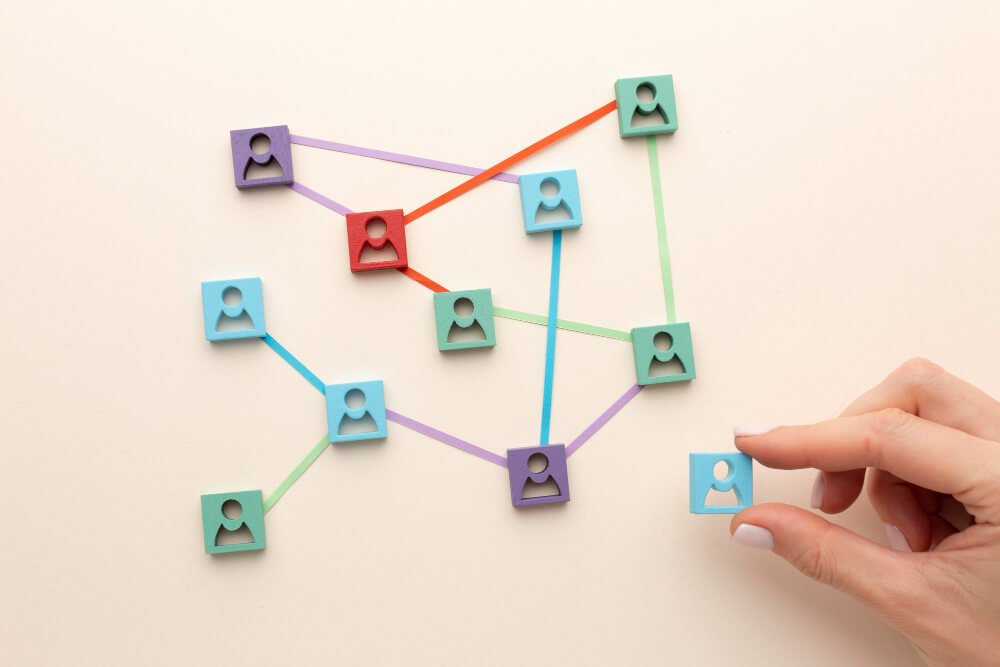
Project teams grappling with stakeholder disagreements often face the challenge of untangling competing interests and unclear motivations. Picture a cross-functional initiative where marketing, technology, and compliance teams each have their own set of priorities. Resolving these differences without a clear framework can stall decisions and drain morale. Two established methods—affinity mapping and Relationship Mapping—offer structured ways to address these challenges, but they serve fundamentally different purposes.
Affinity mapping excels at finding consensus among varied ideas, while mapping relationships uncovers the hidden dynamics and influence patterns between individuals and groups. Recognizing which one to use can make the difference between productive collaboration and ongoing conflict.
Defining Affinity Mapping in Collaborative Problem Solving
Affinity mapping is a technique designed to bring clarity to a jumble of ideas, opinions, or issues by grouping them according to natural similarities. During a stakeholder workshop, team members might contribute dozens of sticky notes, each representing a unique concern, suggestion, or question. The group then clusters these notes into themes, helping everyone see where priorities and pain points overlap. This process not only surfaces consensus but also highlights outlier issues that need further attention.
For example, in product development meetings, affinity mapping can reveal that most stakeholders are focused on user experience, while only a few are concerned with technical feasibility. By visualizing these clusters, teams can prioritize actions that address the widest needs first. The method is particularly effective in the early stages of problem solving, where the main objective is to organize chaotic input into actionable categories. A detailed overview of the affinity grouping process can help teams follow best practices when applying this technique.
Affinity mapping does not, however, account for the power structures or interpersonal dynamics that often shape decisions in multi-stakeholder environments. It treats each idea as equal, focusing on content rather than context.
Analyzing Relationship Mapping for Complex Stakeholder Networks
Unlike affinity mapping, diagramming stakeholder relationships is about uncovering the influence, alliances, and potential conflicts among the people involved. In a large infrastructure project, for instance, a project manager might chart out how regulatory agencies, community leaders, investors, and internal teams interact. This type of network visualization clarifies who has direct authority, who acts as an influencer, and where informal alliances may impact the outcome.
Using Relationship Mapping helps organizations anticipate where resistance might occur and which individuals are positioned to mediate disputes. This approach is especially useful when the key challenge is not what issues exist, but how decisions are made and by whom. Mapping these connections can reveal hidden bottlenecks or veto points that would otherwise derail a project. The resulting diagram serves as a living reference for anyone tasked with stakeholder engagement.
This form of mapping is not about clustering ideas; it’s a tool for understanding the power dynamics that drive or block progress. When the goal is to navigate complex social structures, this framework offers insights that affinity grouping alone cannot provide.
Comparing Core Mechanics of Both Methodologies
At their core, affinity mapping and visualizing stakeholder relationships differ in both process and outcome. Affinity mapping relies on physical or digital tools—sticky notes, whiteboards, or collaborative apps—to sort ideas into themes. The focus is on surfacing patterns from the content itself, making it ideal for brainstorming sessions or requirements gathering where the main obstacle is information overload.
By contrast, relationship diagrams require a map of people, their roles, and the lines that connect them—such as reporting relationships, informal alliances, or channels of influence. This technique is often supported by specialized software that enables ongoing updates as personnel or dynamics shift. Comparing stakeholder analysis techniques shows that each method requires different inputs: one is idea-centric, the other person-centric.
Choosing between Relationship Mapping vs affinity mapping depends on the nature of the problem. If the challenge is understanding what matters most to the group, affinity mapping brings order to the chaos. If the difficulty lies in managing the people themselves, visualizing relationships uncovers the hidden levers of power and influence.
Selecting the Right Framework for Stakeholder Alignment
For teams aiming to build alignment in settings with complex stakeholder dynamics, the choice of methodology must fit the stage and nature of the challenge. When launching a new initiative and the main barrier is the sheer volume of input, affinity mapping provides a quick path to identifying shared priorities and divergent perspectives. This is particularly useful during project kick-offs, design sprints, or strategic planning sessions where clarity is needed on what issues to tackle first.
As teams move into decision-making or conflict resolution, understanding who needs to be convinced and how relationships affect outcomes becomes critical. Mapping out the stakeholder network helps determine which alliances are necessary for buy-in and where opposition may arise. This approach is invaluable in situations where power dynamics, not just ideas, determine success.
Some organizations blend both methods: starting with affinity grouping to clarify key themes, then using stakeholder relationship diagrams to plot the path to agreement. Recognizing when to apply each framework can increase the odds of building lasting alignment and avoiding project gridlock.
Conclusion
Begin with affinity mapping to clarify group priorities, then shift to stakeholder network mapping when interpersonal dynamics threaten progress. Selecting the right technique for the problem at hand will help ensure that stakeholder engagement is both organized and effective.