

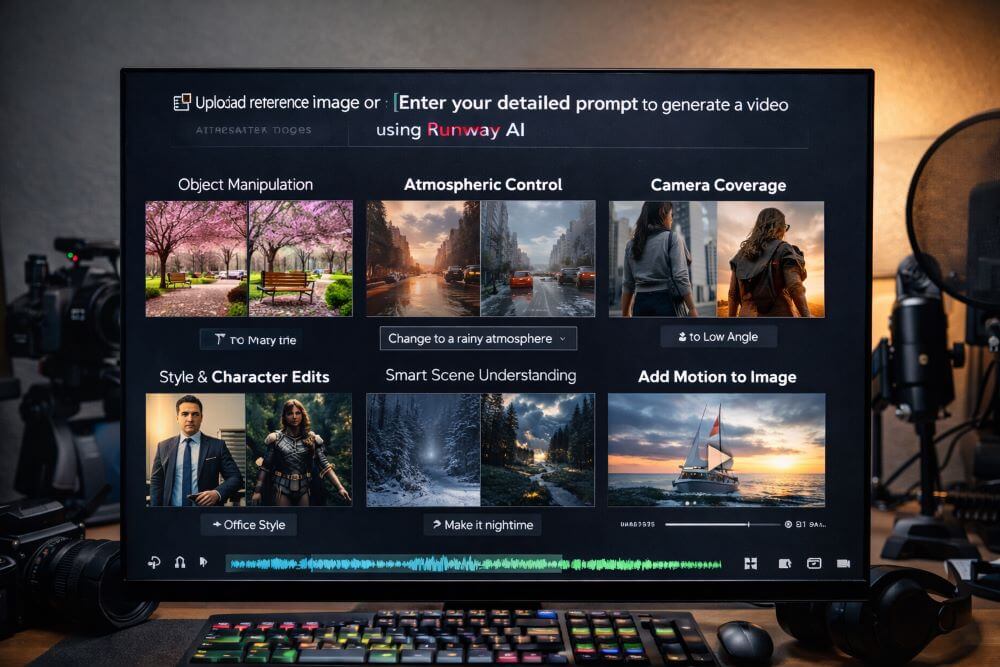
Runway AI video helps you edit and transform videos using simple text prompts. When paired with a platform that handles scripting, visuals, and audio, it becomes a full production system. You can create brand videos faster, test ideas quickly, and publish polished content in minutes. If you want to scale video content without complex tools, this is the direction to explore.
Creating strong brand videos is still hard for most teams. You need editors, designers, and time. That’s why many brands post fewer videos than they should.
But here’s the shift. Tools like Runway AI video now let you change footage using text. You can add objects, adjust lighting, or change camera angles without re-shooting anything.
Video matters more than ever. According to a Forbes report on video marketing growth, businesses using video see higher engagement and conversion rates. Yet most teams struggle with production speed.
This guide shows how Runway AI video fits into modern content workflows. You’ll see how it helps with editing, storytelling, and scaling brand content. More importantly, you’ll learn how to actually use it in a way that drives results.
What is Runway AI video and how does it work?
Runway AI video lets you edit and transform existing footage using text prompts. Instead of creating videos from scratch, it analyzes your video’s structure and lets you modify scenes, lighting, objects, and camera angles while keeping everything realistic.
At its core, Runway Aleph is built for editing, not just generating.
It studies:
- Scene geometry, meaning how objects sit in space
- Lighting conditions, so edits look natural
- Camera perspective, so new angles feel real
This allows changes like:
- Adding or removing objects
- Shifting camera positions
- Relighting scenes
- Adjusting style or mood
Unlike basic generators, it does not guess randomly. It works with your actual footage and improves it.
Why brands are shifting to AI video editing
Brands need more content, faster.
The demand is not slowing down. A Wikipedia overview of digital marketing trends shows how video has become a central format across platforms.
But traditional production has limits:
- High cost
- Slow turnaround
- Hard to scale
AI editing changes that.
Now, teams can:
- Reuse existing footage instead of shooting again
- Test multiple versions of a video quickly
- Create content for different platforms without starting over
This is where Runway AI video stands out. It lets you treat video like something flexible, not fixed.
How does Runway AI video improve brand storytelling?
Runway AI video improves storytelling by letting you change scenes, perspectives, and visuals without reshooting. You can experiment with creative ideas, refine messaging, and adjust tone quickly, which helps brands tell clearer and more engaging stories.
Storytelling is not just about filming. It’s about shaping the message.
With this approach, you can:
- Turn one video into multiple story angles
- Adjust mood with lighting changes
- To fit your message, add or remove items
For example:
- A product video can become a lifestyle ad
- A tutorial can become a short social clip
- A single shoot can generate multiple campaigns
This flexibility matters. It lets brands respond faster to trends and audience feedback.
Using Runway AI video inside workflows
When you use Runway AI video inside an AI-powered content creation platform such as invideo, the process feels like working with a full production team.
In a genuine workflow, it looks like this:
- You begin with a straightforward concept or script
- Invideo builds the structure, scenes, and flow
- Runway Aleph handles detailed visual edits
- The system adds voiceovers and music
- You get a ready-to-publish video in minutes
This setup works because each part has a role.
Runway focuses on visual transformation. Invideo acts like a director, managing the story, pacing, and final output.
You can:
- Change a scene’s camera angle without reshooting
- Add motion to static images
- Fix lighting issues instantly
- Adjust characters or objects for consistency
This is especially useful for marketers who need speed without losing quality.
Also, if you are comparing different video making apps, these types of app-integrated platforms stand out because it combines editing, generation, and production in one place.
What features make Runway Aleph powerful?
Runway Aleph stands out because it edits videos with context. It understands space, lighting, and movement, which allows realistic changes like camera shifts, object edits, and scene adjustments without breaking visual consistency.
Let’s break down the key features:
Object manipulation
You can add or remove objects from a scene. The system keeps shadows and lighting consistent.
Camera control
You can describe a new angle, like a low-angle shot. The AI rebuilds the scene to match that view.
Atmospheric changes
You can adjust lighting, weather, or mood. This helps match brand tone.
Style and character edits
You can change how scenes look while keeping characters consistent.
Smart scene understanding
The AI reads the structure of the video before making changes. This avoids unrealistic edits.
Add motion to images
Static visuals can turn into moving scenes, which helps when you lack video footage.
What kinds of brand videos are you capable of making?
You can create ads, product videos, social media clips, educational content, and even films using Runway AI video. The flexibility comes from being able to edit and adapt visuals quickly, which helps brands produce content at scale.
Here are common use cases:
Marketing and ads
- Product launches
- Social media campaigns
- Performance ads
Educational content
- Tutorials
- Course videos
- Explainers
Social media content
- Short-form videos
- Reels and clips
- Viral-style edits
Creative projects
- Music videos
- Story-driven content
- Visual experiments
One interesting addition is how voice-overs fit in. If you pair this with a script-to-speech workflow, you can generate narration that matches your visuals without recording audio manually.
Why does this approach matter for the future of branding?
AI-driven video editing will shape how brands create content in the future. It reduces production barriers, speeds up content cycles, and allows brands to test and improve ideas quickly, which leads to better engagement and growth.
Branding is becoming more dynamic.
Instead of one polished campaign, brands now need:
- Continuous content
- Fast iteration
- Personalized messaging
AI helps with all three.
You can:
- Launch content faster
- Test variations
- Scale production without hiring large teams
Also, ownership matters. When you create a Runway AI video through AI-powered, comprehensive audio-visual content creation platforms like invideo, you retain full rights. That means you can monetize and distribute your content freely.
This shift changes how brands think. Video becomes a daily tool, not a rare project.
Conclusion
Runway AI video changes how you think about video creation. It turns editing into something flexible and fast. You can reshape footage, test ideas, and improve storytelling without starting from scratch.
The key takeaways are simple:
- You don’t need complex tools to create high-quality videos
- You can reuse and improve existing content
- You can scale brand storytelling with less effort
Try creating one video. Then try variations of it. That’s when the real value shows up.
What kind of video would you test first if you could edit it just by typing what you want?
Frequently Asked Questions
1. What is Runway AI video used for?
Runway AI video is used to edit and transform existing videos using text prompts. You can adjust scenes, lighting, objects, and camera angles without reshooting footage. This makes it useful for marketing, content creation, and storytelling.
2. How is Runway Aleph different from other AI video tools?
Runway Aleph focuses on editing rather than generating from scratch. It understands scene structure and lighting, which helps create realistic edits. This makes it more reliable for improving existing footage.
3. Can beginners use Runway AI video tools?
Yes, beginners can use it. The process relies on simple text prompts instead of complex editing skills. Many platforms also guide the workflow, making it easier to create polished videos.
4. Is AI video good for brand marketing?
Yes, AI video helps brands create more content quickly. It allows testing different ideas and formats, which improves engagement. Faster production also means brands can stay consistent online.
5. Do I own the videos created with AI tools?
In most cases, yes. When using platforms that provide commercial rights, you can monetize and distribute your videos freely. Always check the platform’s terms before publishing.