
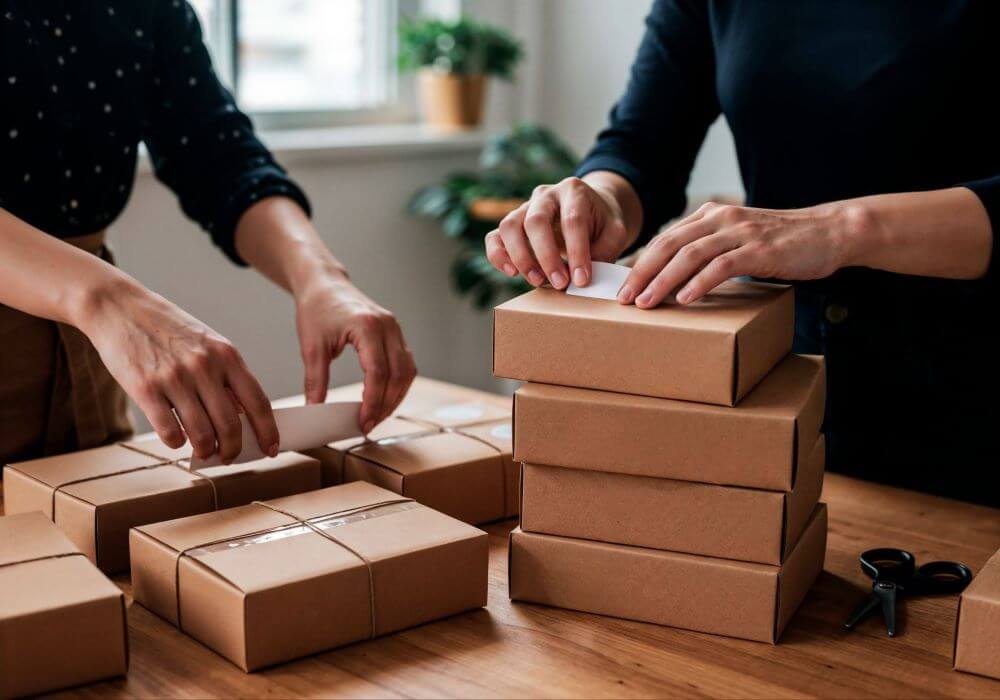
Packaging is often the first actual interaction between customer and brand; first contact, if you will. It’s the box at the shop, the pouch, even the label sleeve, or simple wrapper sitting right in front of them as they excitedly open the package, eagerly anticipating their latest purchase. That’s what sets the tone. For brand growth and your overarching marketing strategy, packaging shouldn’t be ignored.
Packaging First Impressions
First impressions are lasting; you (really) never get a second chance. Oscar Wilde and Judy Sheindlin say this about us as individuals, but it’s just as applicable to brands.
Packaging gives instant clues about quality and price, whether the company actually cares about the details, the customer, or if a package they send out is just bunged into a pile alongside hundreds of other seemingly anonymous orders.
But packaging is important; it’s the first impression you give your new customers. It’s part of the product, not just something around it. You don’t have to package it like something out of David Jones or Myer if it doesn’t fit your brand, but do make an effort.
For example, a clean and clear package can be enough to send signals of reliability and simplicity. Messiness can make a great product look cheap or rushed. In crowded spaces, these first impressions matter.
This isn’t a claim that comes out of thin air, either. In a 2025 systematic review, researchers found that packaging design and presentation affect purchasing decisions in a multidimensional way, setting product expectations and a quality position. Just think of the first time you ever got your hands on a high-end device like an iPhone. That box was as solid (and as pleasing to the touch) as the glass and aluminium masterclass that lay inside.
eCommerce, Influencers, and the Unboxing Moment
Companies often think that because they operate exclusively or largely online, packaging doesn’t matter. The customer sees the product on the website, not the packaging, right?
That may have been true a decade ago, but it is no longer. Influencers have changed the game and given packaging a second life online. Unboxing, as it is called, is incredibly popular with social media influencers. There are entire channels dedicated to opening products (to the delight of hundreds, if not thousands, of fans). You see it everywhere online, including TikTok, Instagram, and YouTube.
Packaging takes an outsized role in reels and videos, with the unboxing part an important part of the anticipation and review process. Take WearTesters, for example. It’s a YouTube channel dedicated to (primarily) basketball sneakers, with almost 1 million subscribers. In a recent review of the Air Jordan Skyline Low, the company dedicated a section of the video to just the box.
The thing is, the packaging adds to the overall feel of the product, the perceived quality. If your Jordans or even everyday supermarket cereal comes in a bog-standard box, you will have the impression that this is exactly what you’re consuming.
Turning Recognition Into Memory
Brand growth depends on being remembered. Packaging is a crucial part of this process, as it sets continuity in colours, type, layout, shape, and tone, each and every time a customer sees your product in its designed packaging. You need look no further than the iconic jeweller Tiffany’s for an excellent example of this idea in practice.
That’s why it’s so important to keep those key brand elements consistent across your product lines. Logo placement should be exact, a recognisable colour system should be implemented, and continuity should give consumers ideas of permanence and being established, even if you’ve only just launched.
When you introduce an entirely new product line, make an effort to show it’s part of the brand family. It should not be isolated, living on an island, even if the design itself is strong.
No, you build trust and recognition through these consistency signals, embedding your brand into a consumer’s memory, even if they don’t actively realise it. Recognition is a long game; it’s not something that happens overnight. It builds over months or even years, so avoid changing the look too often (unless research is showing you that the design is truly weak).
Packaging Trends Support Brand Growth
Packaging is not taking a backseat, even in the midst of an explosion of online orders. Similar to trends seen in the printing world, the role of packaging is changing.
Customers now expect less waste and a more tailored experience. Packaging isn’t static, but changes and responds to short-term demand. Shorter print and packaging runs allow companies to be nimble, quick to respond to a changing landscape and customer wants.
It also means less waste and a more sustainable packaging solution. And that’s exactly what customers are looking for, with societal expectations closely tied to environmental concerns.
We’re also seeing the modernisation of packaging, with variable data attached to products via QR codes. These allow companies to save on print instructions, for example, or add relevant localised information or interactive elements via an online presence.
Packaging Carries the Brand
Packaging isn’t just for carrying the product inside; it also carries the brand itself. It’s a first impression, a tactile introduction to the brand, a setting of expectations and quality, and part of the experience of unboxing, an event all of us can relate to, as we harken back to our childhoods and the excitement holidays and birthdays would bring.
For growing businesses, strong packaging is not a finishing touch. It’s a marketing tool, it’s the first meeting, it’s starting to establish a deeper connection with a customer that leads to long-term loyalty. It keeps working long after the packaging itself has been put into the recycling bin.