

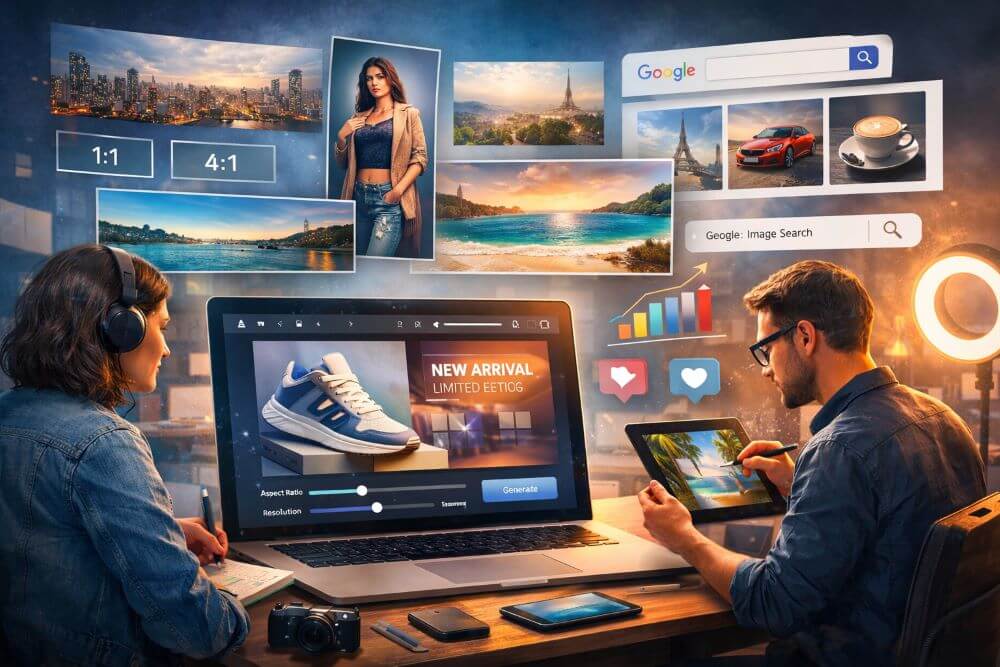
AI image models now help startups create high-quality visuals faster and with more control. Tools like Nano Banana 2 improve accuracy, layout flexibility, and speed. This guide explains how these models work, why they matter for content strategy, and how you can use them to scale visual production. If you want consistent, fast content, start using AI image generation today.
Startups often struggle with one thing: creating enough visual content to keep up with modern marketing. Social posts, ads, landing pages, and product visuals all need fresh images. Time, money, and design expertise are required for that.
Nano Banana 2 changes that. It allows teams to generate images quickly, with better accuracy and more control over layout and format. According to a report by Forbes, brands that use visual content grow engagement rates by over 40% compared to text-only posts.
That shift explains why AI image models are now part of most startup workflows. They reduce production time and make it easier to test ideas quickly. This article breaks down how these tools work and how you can use them in your content strategy.
How does Nano Banana 2 operate and what is it?
Nano Banana 2 is an AI image model that creates images from text prompts. It uses real-time data from Google web and image search to improve accuracy and context. It also supports multiple aspect ratios and generates images faster than earlier models.
At its core, this model turns written ideas into images. The system creates what you specify.
It improves on earlier tools in a few ways:
- Faster image generation for quicker workflows
- Better detail and color accuracy
- Support for new aspect ratios like 1:8 and 8:1
- Grounding with real-world data using search references
Startups can produce images that feel more like real-world material thanks to these enhancements.
Why do startups need AI image models now?
Startups need AI image models because content demand has increased across platforms. Teams must produce visuals for ads, social media, and product pages at a much faster pace than before.
The volume of content required today is much higher than even five years ago. A Wikipedia overview of digital marketing shows how visual content drives engagement across channels.
AI models help solve this problem by reducing production time. Instead of waiting days for design work, teams can create visuals in minutes.
This makes it easier to:
- Test different campaign ideas quickly
- Maintain consistent branding across platforms
- Produce content without large design teams
Key features that improve content creation
Modern AI image models offer features that go beyond simple image generation. They improve how teams plan, test, and scale content.
Nano Banana 2 includes several updates that matter for startups:
- Real-time grounding: Uses Google search data for more accurate visuals
- Flexible layouts: Supports wide, tall, and panoramic formats
- 512×512 resolution output for consistent image quality
- Semantic understanding: Interprets complex prompts with better context
These features make the output more usable for real campaigns, not just experiments.
How does real-time grounding improve image accuracy?
Real-time grounding improves image accuracy by using current web and image data as references. This helps the model understand objects, styles, and contexts more clearly, leading to visuals that match real-world expectations.
Without grounding, AI models rely only on training data. That can lead to generic or outdated visuals.
With grounding, the system checks real-world references. This leads to:
- More accurate product visuals
- Better representation of trends and styles
- Improved consistency across multiple images
For startups, this means fewer revisions and more reliable outputs.
Using AI images in startup workflows
Startups can use AI-generated images across multiple parts of their marketing and product strategy. The key is to integrate image generation into daily workflows.
For example, a small team might use Nano Banana 2 free within the complete AI-powered content creation suite of invideo to generate product images, then turn those into marketing videos with its integrated free AI video app. This connects image creation directly with video production in one workflow.
Common use cases include:
- Social media posts and ads
- Product mockups for e-commerce
- Blog and landing page images
- Visual storytelling for brand campaigns
This approach reduces reliance on external design resources.
What makes Nano Banana 2 different from older models?
Nano Banana 2 stands out because it combines faster generation, better quality, and real-time data grounding. It also supports more aspect ratios and consistent resolution, which improves usability for marketing and design tasks.
Older models often struggled with speed and accuracy. They also had limited layout options.
This model introduces:
- New aspect ratios like 1:4 and 4:1
- Faster processing for quicker turnaround
- Improved visual fidelity with better detail
These upgrades make it more practical for real-world use.
Scaling content without increasing costs
One of the biggest benefits of AI image models is cost efficiency. Startups can produce more content without increasing team size or budget.
When you are able to use Nano Banana 2 free inside an AI-powered digital content creation platform like invideo as an AI image model, you can generate unlimited images without worrying about usage limits. This allows teams to experiment freely and test multiple ideas.
It also helps with:
- Bulk content creation for campaigns
- Rapid testing of visual concepts
- Maintaining output consistency
This makes it easier to scale content production as the business grows.
Conclusion
AI image models are changing how startups approach content creation. They reduce production time, improve quality, and make it easier to scale visual output.
Nano Banana 2 adds another layer by improving accuracy and flexibility. It helps teams create better images without complex workflows.
If you want to keep up with modern content demands, start experimenting with AI image generation. The sooner you integrate it into your workflow, the easier it becomes to scale.
What would you create if visuals were no longer a bottleneck?
Frequently Asked Questions
What is Nano Banana 2 used for?
Nano Banana 2 is used to generate images from text prompts. It helps create visuals for marketing, product design, and content creation quickly and efficiently.
How accurate are AI-generated images?
Accuracy depends on the model. Tools with real-time grounding, like Nano Banana 2, produce more accurate visuals by referencing current web and image data.
Can startups rely on AI for content creation?
Yes, many startups use AI to scale content production. It helps reduce costs and speeds up workflows while maintaining consistency.
Does AI image generation replace designers?
No, it supports designers. AI handles repetitive tasks, while designers focus on strategy and creative direction.
How do aspect ratios impact content?
Aspect ratios determine how images fit different platforms. New formats like 1:8 or 8:1 allow more flexibility for banners and social media layouts.